

Why wood heat
A wood stove heats a home with zero electricity. In a winter outage, it's the difference between camping in your living room and living normally. Off-grid, it's the most common primary heat in cold, forested country like ours.
Stove, insert or fireplace?
| Heat output | Efficiency | Notes | |
|---|---|---|---|
| Freestanding wood stove | high | 65–80% (EPA-certified) | the best choice for outage and off-grid heat; most have a flat top for cooking |
| Fireplace insert | medium–high | 65–80% | turns an open fireplace into a real heater |
| Open masonry fireplace | low | 10% or less, often negative | pretty, but pulls warm air out of the house |
| Pellet stove | medium–high | 70–85% | needs electricity for the auger and fan — only works in an outage with a battery or generator |
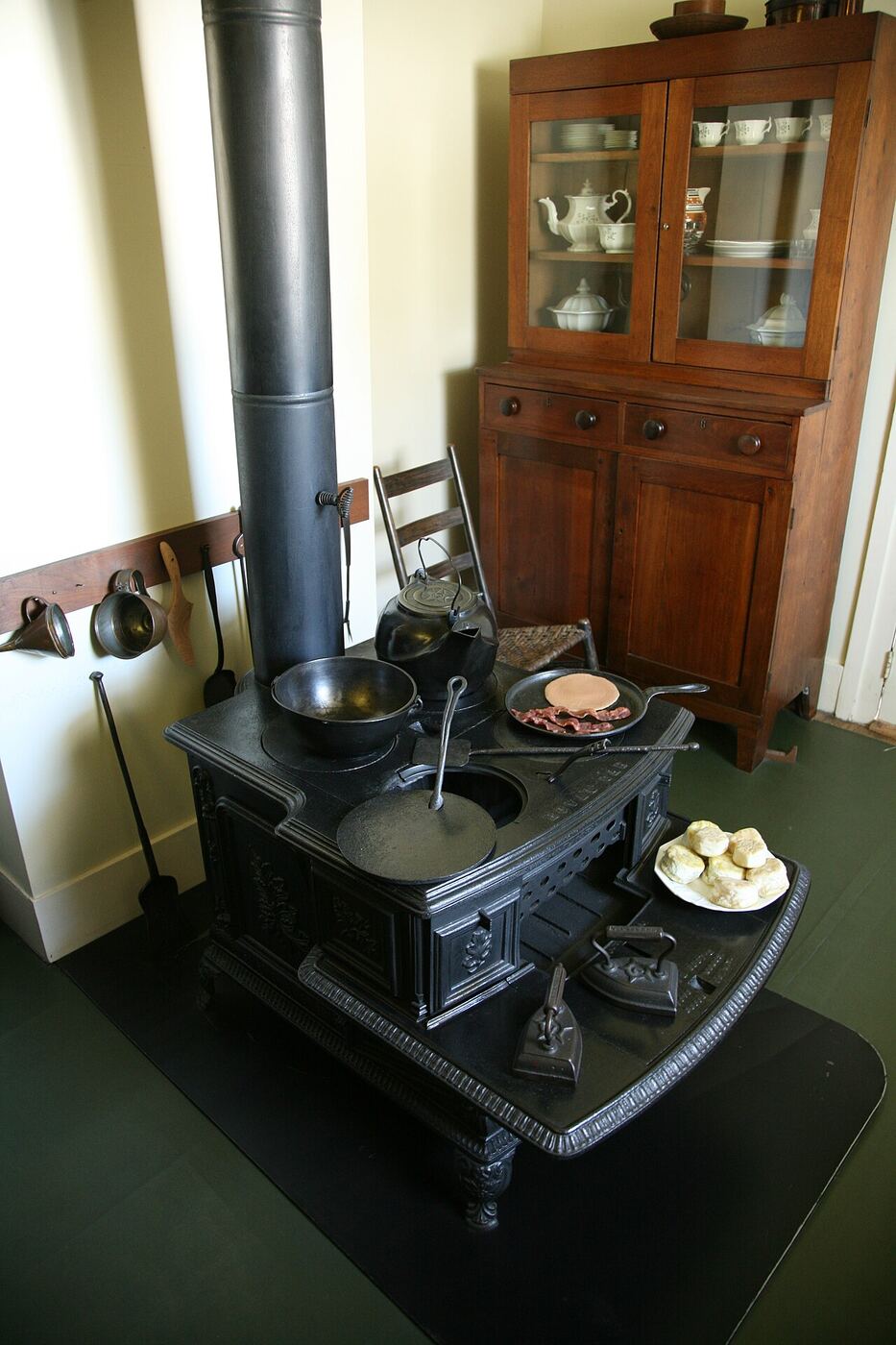
| Wood cookstove | medium | varies | heats, cooks and can heat water; the classic homestead option |
Buy an EPA-certified stove. They burn cleaner, need less wood, and are required in many areas. Installation must meet code — clearances to walls, floor protection, and a proper chimney. Get a permit and inspection; your insurer will ask.

How much wood?
A cord is a neat stack 4 ft high × 4 ft deep × 8 ft long (128 cubic feet). A "face cord" or "rick" is usually only one-third of that — ask what you're buying.
Rough guide for the Inland Northwest:
- Backup / outage heat: ½–1 cord gets you through several long outages.
- Supplemental heat (evenings, cold snaps): 1–3 cords a winter.
- Primary heat for an average, reasonably insulated house: 3–6 cords a winter.
Common local woods: tamarack (western larch) and Douglas fir are excellent; ponderosa pine burns fast and lighter; birch is good; seasoned cottonwood is poor.
Seasoning: the most important part
Wet wood barely heats, smokes, and coats your chimney with creosote. Firewood should be below 20% moisture.
- Cut, split and stack wood 6–12 months before burning (softwoods) — longer for dense hardwoods.
- Stack off the ground on pallets or rails, bark up, with air gaps between rows.
- Cover the top only. Leave the sides open so wind dries it.
- A moisture meter ($25) removes all guesswork: split a piece and test the fresh face.
- Seasoned wood is lighter, has cracks in the ends, and makes a hollow "clack" when two pieces hit.
Burning well
- Top-down fire: big splits on the bottom, smaller on top, kindling and paper on the very top. Light the top. It burns down cleanly with little smoke.
- Open the air control fully while starting, then turn it down gradually once the fire is established — but never so low that it smolders.
- Look at your chimney from outside: clear or white wisps are good; thick dark smoke means wet wood or too little air.
- Burn hot fires regularly. Long, smoldering fires build creosote.
- Never burn trash, cardboard, painted or treated wood, plywood, or driftwood (salt).
Chimney fires
Clean your chimney every year
Creosote is a black, flammable tar that builds up inside chimneys. A chimney fire roars, shakes the pipe, and can spread into the house. Have the chimney inspected and swept at least once a year — more often if you burn a lot. If you hear a roar, see flames or sparks from the top, or the stovepipe glows: close the air controls and stove door, get everyone out, and call 911.
Also: keep a CO alarm and smoke alarm near the stove, a fire extinguisher in the room, and a 3-foot clear zone around it. Store ashes in a lidded metal can, outside, on a non-flammable surface.
Splitting and safety
- A splitting maul (6–8 lb) or a modern splitting axe does most work. Split on a chopping block, not the ground.
- Wear safety glasses and boots. Keep your feet wide and bystanders well back.
- Chainsaw work needs chaps, eye and ear protection, a helmet, and training. Most chainsaw injuries come from kickback. Never cut above shoulder height or alone.
- Know the rules for firewood cutting on public land — the Colville and Idaho Panhandle National Forests sell personal-use firewood permits.
Sources: EPA — Burn Wise · Chimney Safety Institute of America · NFPA — Heating safety