

If you have a well
A typical submersible well pump runs on 240 volts and needs a lot of power to start. When the grid goes down, so does your water. Options, from simplest to most robust:
- Store water (see Water) — the baseline for everyone.
- Generator + transfer switch/interlock. A ½–1 hp pump needs roughly 1,000–2,000 running watts and 2,000–4,000+ starting watts — usually a 5,000 W+ generator, 240 V capable. Run it to fill a storage tank, not around the clock.
- Pressure tank and storage: a bigger pressure tank, or an above-ground storage tank, means fewer pump starts.
- Hand pump installed in the same well, alongside the electric pump. Modern hand pumps can lift water from 200+ feet, and some can pressurize your house plumbing. A hand pump is the ultimate backup: no fuel, no electricity, works forever.
- Solar well pump (DC pump with its own panels) that fills a cistern during sunny days.
Know your well
Find your well log: depth, static water level, and yield (gallons per minute). That decides what kind of hand or solar pump will work. Washington well reports are searchable through the Department of Ecology.
Rainwater catchment
A roof is a big water collector. The math:
Gallons = roof area (sq ft) × rainfall (inches) × 0.62
A 1,500 sq ft roof collects about 930 gallons from one inch of rain. Spokane averages roughly 16–17 inches of precipitation a year, mostly from October through May — so a typical roof could catch well over 10,000 gallons a year, if you can store it.
A basic system
- Clean roof and gutters — metal roofs are best for drinking water. Asphalt shingles are fine for gardens.
- Gutter guards / leaf screens to keep debris out.
- A first-flush diverter that sends the first dirty water from each rain away from the tank.
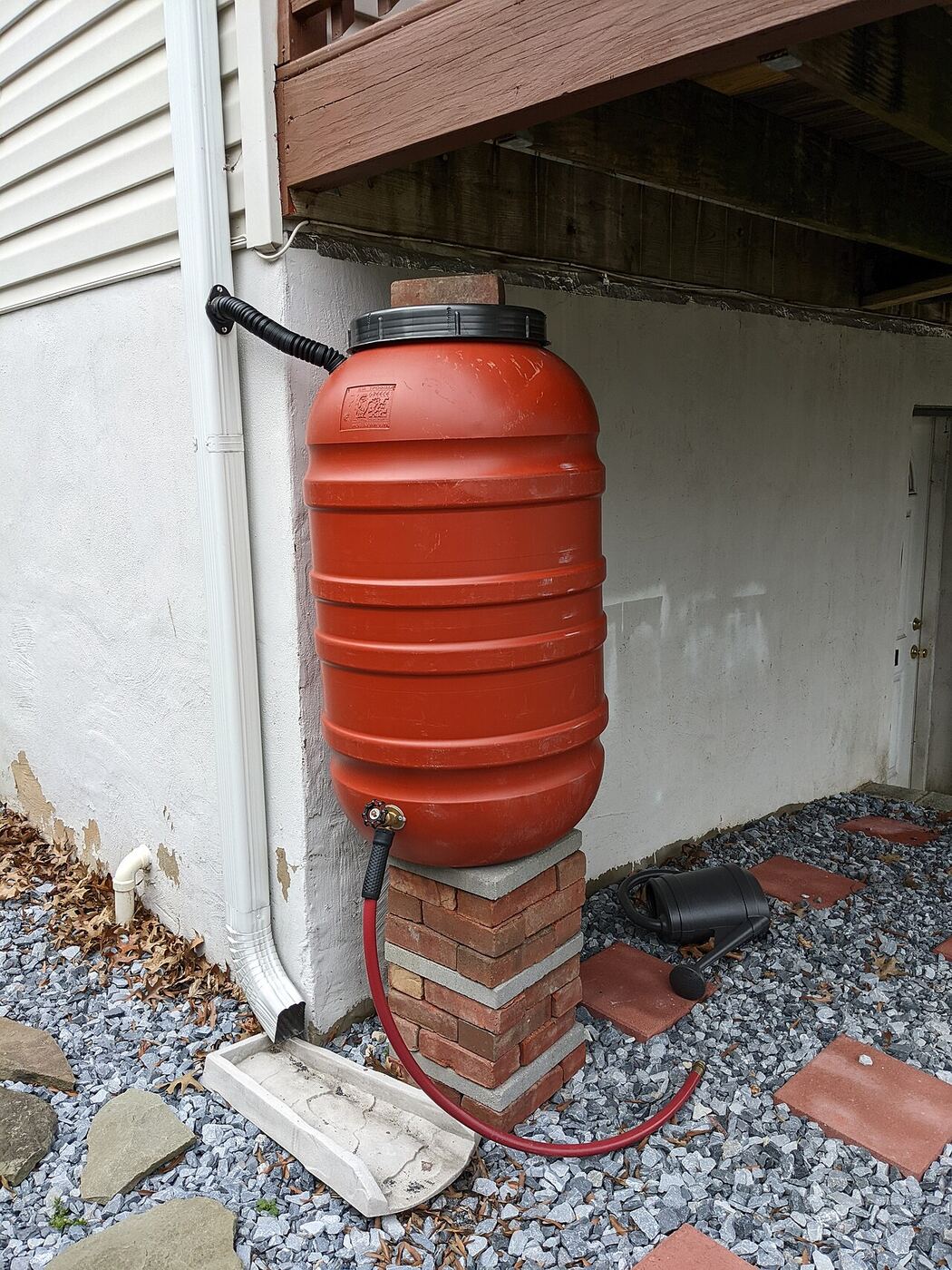
- Storage: rain barrels (55 gallons), IBC totes (275–330 gallons), or a cistern (1,000+ gallons). Use opaque, food-grade containers to prevent algae. Screen every opening against mosquitoes.
- Overflow directed away from the foundation.
- For drinking: filter (sediment + a filter that removes bacteria and protozoa) and disinfect (UV or chlorine), or boil. Test it periodically.
Freezing
In Northwest winters, barrels and above-ground pipes freeze and crack. Drain barrels before hard freezes, or bury/insulate the tank below the frost line (often 24–36 inches here).
Is it legal? In Washington, rooftop collection generally doesn't need a water right; in Idaho it's generally allowed if the water hasn't reached a natural waterway. Drinking-water use can be restricted by your county. See Spokane & the Inland NW.

Springs, creeks and lakes
Surface water almost always contains germs, even when it looks crystal clear. Always filter and disinfect it. Taking water from streams or springs for regular household use usually requires a water right.
Filtration for off-grid water
| Method | Removes | Notes |
|---|---|---|
| Sediment filter | dirt, sand | first stage — protects the other filters |
| Gravity filter (ceramic or hollow-fiber) | bacteria, protozoa; some models also viruses | no power needed; countertop or bucket systems |
| Activated carbon | taste, odor, many chemicals | doesn't make water germ-safe by itself |
| UV light | bacteria, viruses, protozoa | needs clear water and a little power |
| Chlorine | bacteria, viruses (most) | cheap and reliable; see bleach dosing |
| Boiling | all germs | uses fuel; doesn't remove chemicals |
| Distillation (solar still) | germs, salts, most chemicals | slow, small amounts |
Get your well or catchment water tested by a certified lab at least once a year, and after floods. Your county health district can point you to labs.
Using less
Off-grid, every gallon is pumped, hauled or collected. Low-flow faucets and showerheads, a composting toilet, and reusing gray water (from sinks and showers) for gardens can cut use in half. Gray water rules vary by state and county — check before plumbing a system.
Sources: CDC — Private wells · Ecology — Rainwater collection · EPA — Emergency disinfection · Army ATP 3-50.21 Survival (water procurement)