

The fridge and freezer clock
The moment the power goes out, a clock starts.
| Stays safe (door closed) | |
|---|---|
| Refrigerator | about 4 hours |
| Full freezer | about 48 hours |
| Half-full freezer | about 24 hours |
Every time you open the door, you lose cold air. Keep the doors closed, and know what you want before you open one. Use the fridge & freezer timer to track it.
Loading calculator…
Stretch the clock
- Before an outage: keep an appliance thermometer in both. Fridge at 40°F or below, freezer at 0°F or below. Keep frozen jugs of water in the freezer. They fill empty space and act as ice packs.
- Group frozen food together. A packed freezer stays cold far longer than a sparse one.
- Move what you'll need to a cooler with ice, so the fridge stays shut.
- Dry ice keeps a full 18 cu ft freezer frozen for about 2 days with 50 pounds. Handle it with gloves, and keep it ventilated — it releases carbon dioxide.
- In winter, outdoors isn't a fridge. The sun warms food on a porch, and animals get into it. A cooler on the shady side of the house with a thermometer in it can work.
Keep it or toss it?
The rule: perishable food that's been above 40°F for more than 2 hours should be thrown out. You can't tell by smell or look. The germs that make people sick don't change either.
Toss (after more than 2 hours above 40°F):
- meat, poultry, seafood, lunch meat, hot dogs
- milk, cream, yogurt, soft cheeses (brie, cottage, cream cheese, shredded)
- eggs and egg dishes
- cooked leftovers, casseroles, soups, cooked pasta and rice
- cut fruit and vegetables, prepared salads
- opened baby formula; creamy dressings
Usually OK without refrigeration:
- hard cheeses (cheddar, parmesan), butter and margarine
- whole fresh fruits and vegetables
- peanut butter, jelly, ketchup, mustard, pickles, vinegar dressings
- bread, rolls, muffins
Frozen food: if it still has ice crystals or reads 40°F or below, you can refreeze or cook it. Quality may drop, but it's safe.
When in doubt, throw it out
Food poisoning during an outage is extra dangerous: no fridge for medicine, and maybe no clean water or easy hospital trip. Never taste food to see if it's safe.
The no-power pantry
Store at least 3 days, ideally 2 weeks, of food that needs no refrigeration and little or no cooking. Buy what your family already eats, and rotate it: new cans go to the back, old ones get eaten.
What to stock
- Ready-to-eat proteins: canned tuna, chicken, salmon, chili, beans, peanut butter, nuts
- Canned soups, stews and pasta
- Canned fruits and vegetables (in juice or water)
- Grains that need no cooking: crackers, granola, cereal, tortillas, rice cakes
- Comfort food: cookies, hard candy, instant coffee, tea, hot cocoa
- Shelf-stable milk: boxed UHT milk, powdered milk
- Special needs: baby formula and food, pet food, gluten-free or diabetic options
- A manual can opener (two of them) — this is the item people forget most
A rough target is about 2,000 calories per adult per day. A jar of peanut butter is about 3,000 calories, and a can of chili about 600–800.
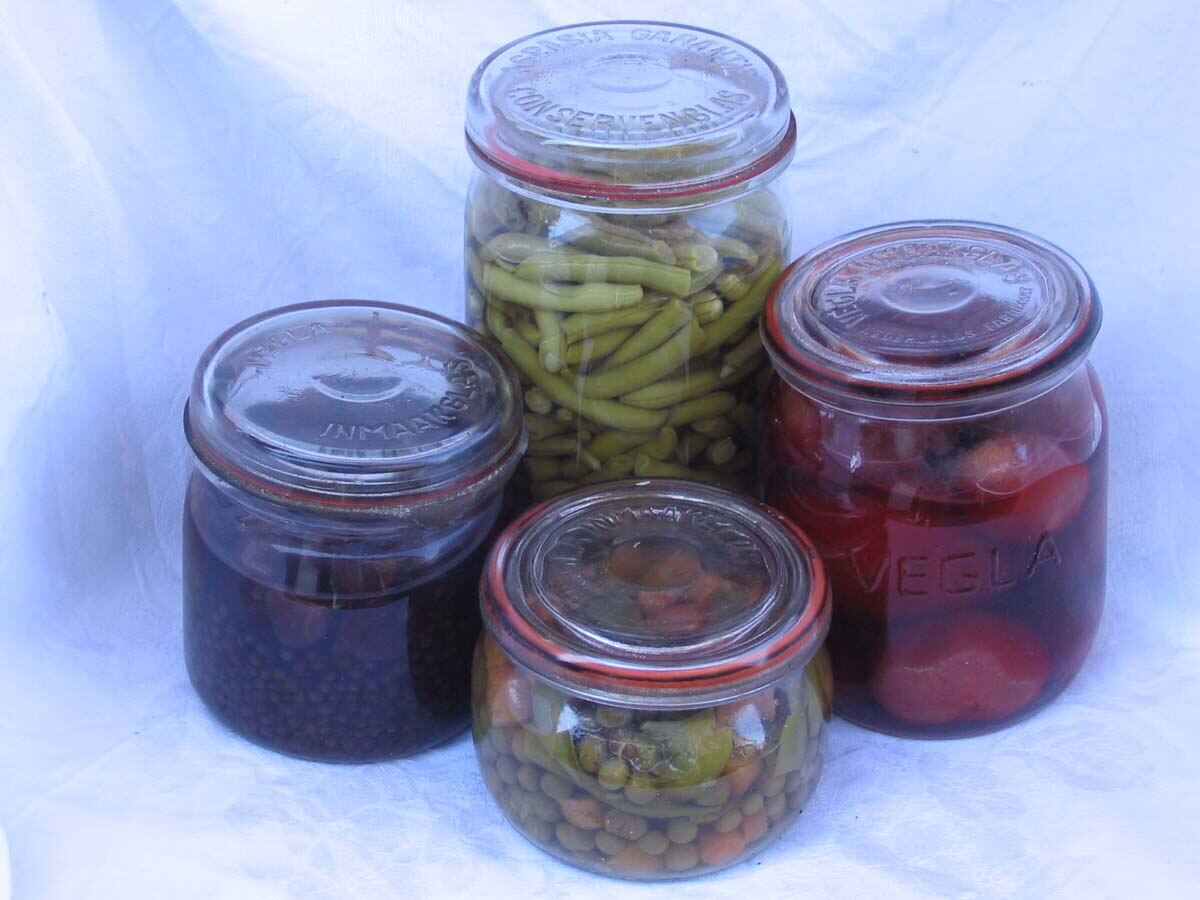

Long-term storage
For storage measured in years, not months:
- White rice, dried beans, rolled oats, wheat, sugar, salt last 10–30 years in airtight containers with oxygen absorbers (mylar bags inside food-grade buckets).
- Brown rice and whole-wheat flour go rancid in months. Rotate them often.
- Freeze-dried meals last 10+ years but need hot water.
- Keep storage cool, dry and dark. Heat is the biggest enemy of shelf life. A cool basement beats a hot garage.
Dried beans need fuel
Dried beans and whole grains need a lot of water and long cooking. Make sure you have the fuel to cook them, or store canned beans and quick-cooking grains too.
Using what you have, in order
- Day 1: fridge food (perishables first)
- Days 2–3: freezer food that's thawing
- After that: the pantry
Sources: USDA FSIS — Keep Your Food Safe During Emergencies · FoodSafety.gov · FEMA — Food and Water in an Emergency