
Composting toilets
A composting toilet uses no water and turns human waste into a stable, soil-like material over time. There are two main types:
- Self-contained units (commercial): waste and cover material go into a built-in chamber, often with a small fan and a urine-diverting seat. Easy to install in cabins and tiny homes.
- Bucket-and-cover systems (DIY "humanure"): a bucket toilet with sawdust as cover, emptied into a dedicated, well-managed outdoor compost pile that gets hot and sits for at least a year before use on non-food plants or trees.
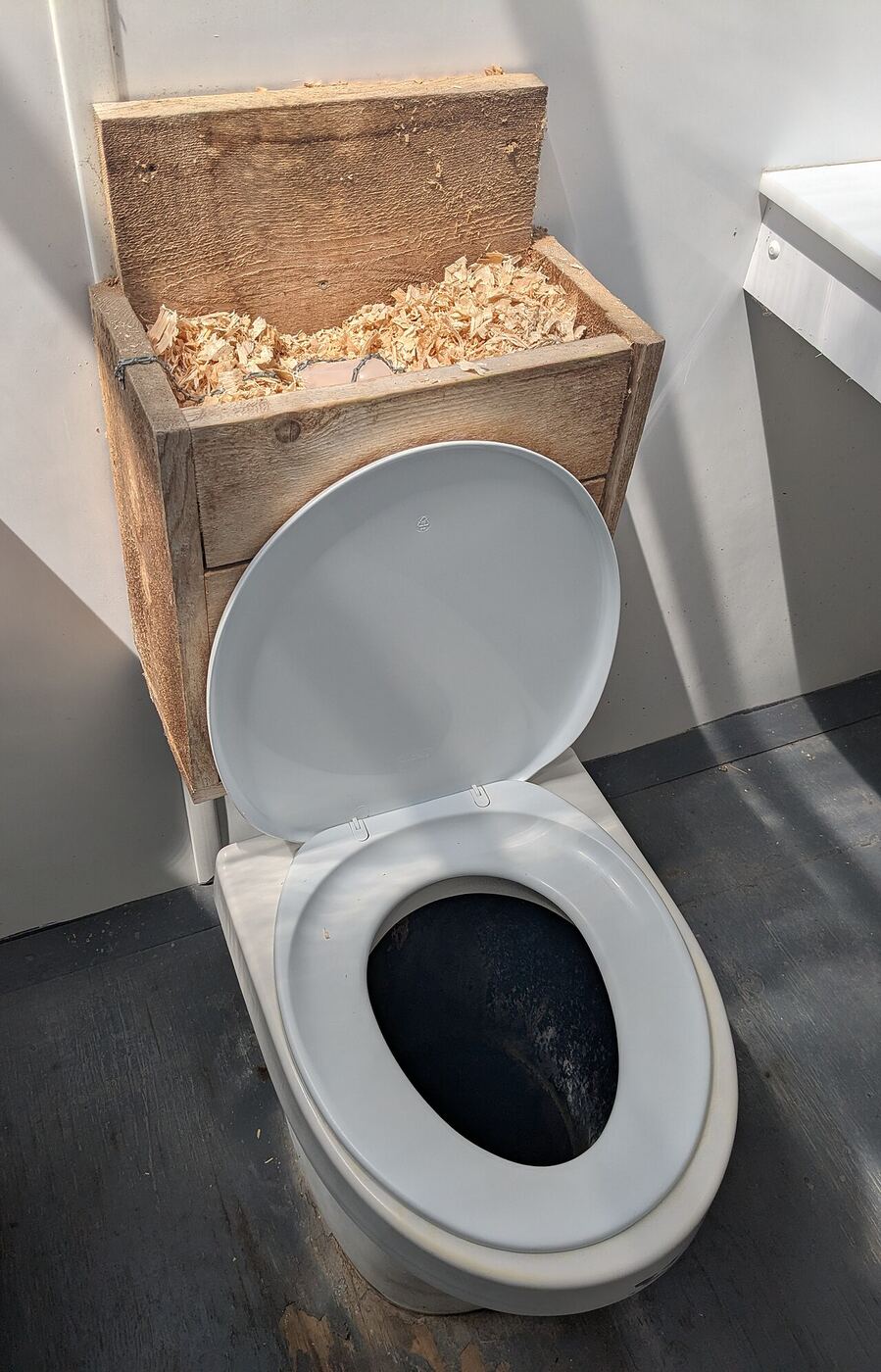

Keys to success:
- Lots of dry cover material — sawdust, peat, coco coir.
- Separate urine if you can. It keeps solids dry and nearly odor-free.
- Time and heat: a hot compost pile (130–160°F) kills pathogens. Let finished material age at least a year.
- Check local rules. In Washington, composting toilets are allowed under state rules, but most counties still require an approved system (often septic) for gray water from sinks and showers.
Septic systems
Most rural homes use septic. A healthy system can last decades:
- Pump the tank every 3–5 years (more with a garbage disposal or big household).
- Don't flush wipes (even "flushable" ones), grease, chemicals or medicines.
- Spread laundry out over the week.
- Keep vehicles, livestock and building projects off the drain field.
- In an outage: gravity systems keep working. Systems with pumps (mound or pressure systems) can back up — cut water use to a minimum until power returns, or put the pump on your generator.
Gray water
Gray water is used water from sinks, showers and laundry (not toilets). Reusing it for landscape irrigation can cut water use a lot. Use plant-safe, low-salt soaps, send it under mulch (not sprayed), and never onto root crops or leafy greens you'll eat raw. Washington allows small gray-water systems under Department of Health rules; check your county.
Composting yard and kitchen waste
Compost turns scraps into the best soil amendment there is.
- Browns (carbon): dry leaves, straw, shredded paper, sawdust.
- Greens (nitrogen): vegetable scraps, coffee grounds, grass clippings, chicken manure.
- Mix about 2–3 parts browns to 1 part greens, keep it as damp as a wrung-out sponge, and turn it every week or two for fast compost, or just pile it up for slow compost.
- Leave out meat, dairy, oils and pet waste from a backyard pile (they attract animals and can carry disease).
- Finished compost is dark, crumbly and smells like the forest floor — usually in 2–6 months for a hot pile, a year or more for a cold one.
Burning trash?
Burning household trash is illegal in most of Washington, including Spokane County — it releases toxic smoke. Outdoor burning of natural yard debris has its own seasonal rules and burn bans. Check with Spokane Regional Clean Air Agency before burning anything.
Sources: WA Department of Health — On-site sewage · EPA — Septic systems · WSU Extension — Composting