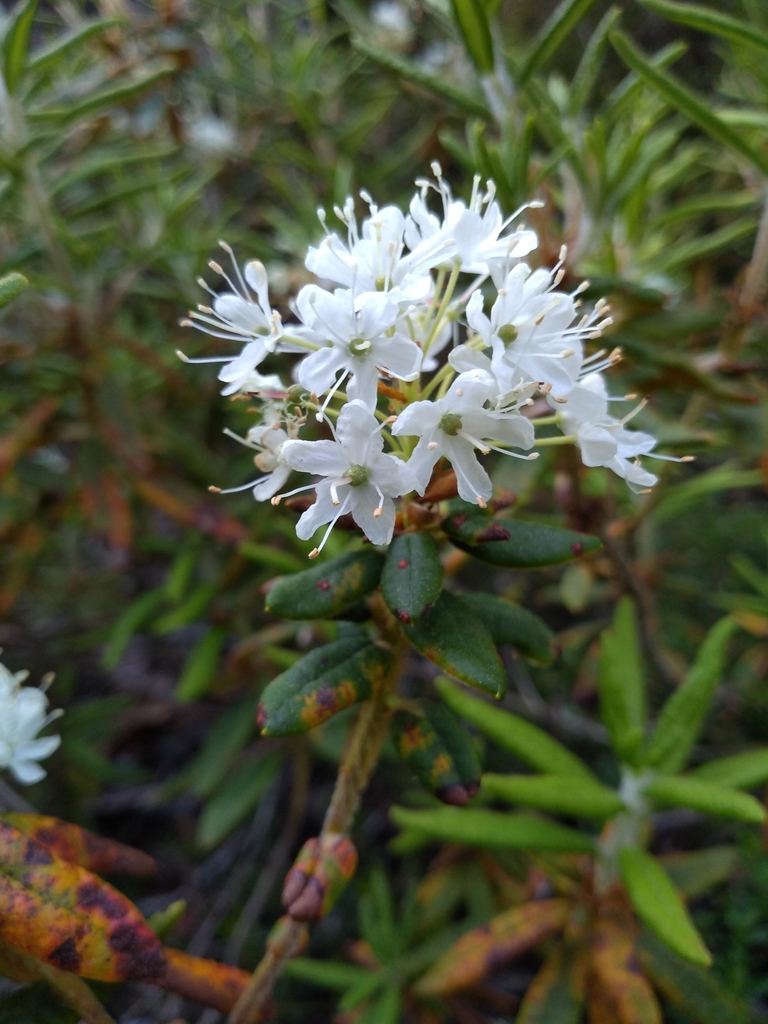
Labrador tea
Rhododendron groenlandicum · Shrub
⚠️ No research-grade iNaturalist sightings inside eastern WA / north Idaho yet — may be rare or local here.
⚠️ Danger
Contains grayanotoxins—only weak tea; avoid if unsure of ID (toxic lookalikes).
How to identify
Evergreen bog shrub with leathery leaves rolled under at edges and rusty fuzz below; white flowers.
Traditional uses
Weak leaf tea used traditionally.
More: iNaturalist · Wikipedia
Background
Rhododendron groenlandicum (formerly Ledum groenlandicum or Ledum latifolium), known by the common names bog Labrador tea, muskeg tea, swamp tea, in northern Canada, Hudson's Bay tea, and in Greenlandic, Qajaasaq (IPA: [qajaːsɑq], resembling a Kayak), is a species of flowering shrub in the family Ericaceae. Found in northern parts of North America and Greenland, R. groenlandicum grows primarily in bogs and other wetlands, which tend to be also in cold, acidic, and nutrient-poor environments. It has traditionally been used to make medicinal herbal teas among the Dene, Athabaskan, and Inuit, and other indigenous cultures of North America peoples.
From Wikipedia, Rhododendron groenlandicum, under CC BY-SA 4.0.