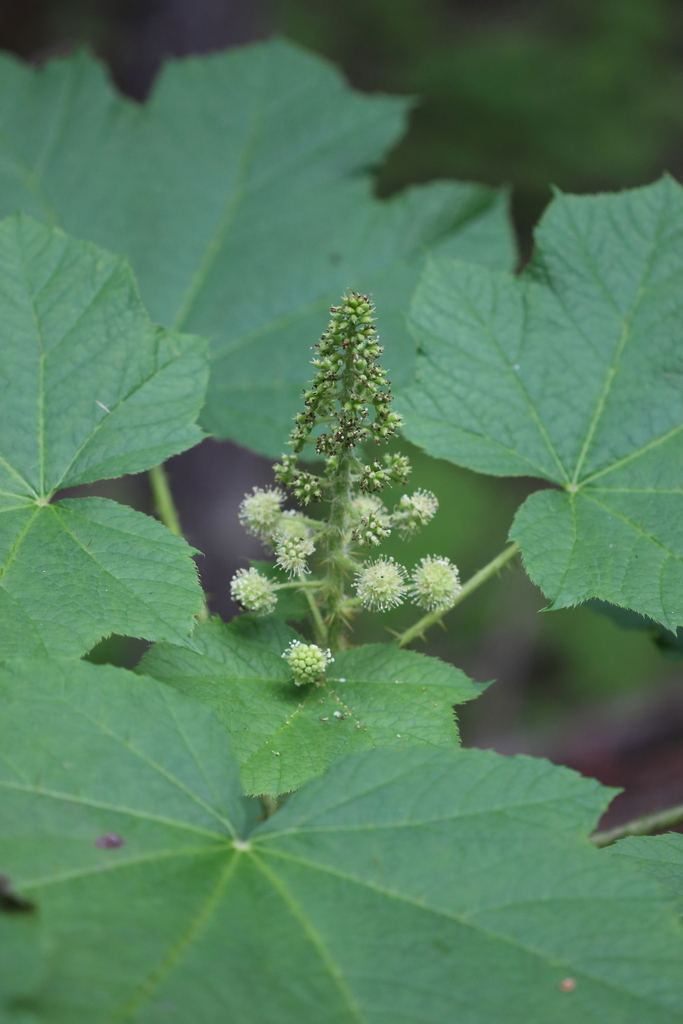
Devil's club
Oplopanax horridus · Shrub
📍 241 verified iNaturalist sightings in eastern WA & north Idaho.
⚠️ Danger
Spines cause painful infections; berries not edible; affects blood sugar—not for diabetics without medical care.
How to identify
Shrub covered in sharp yellow spines with huge maple-like leaves and red berry clusters; wet north Idaho forests.
Traditional uses
Important traditional medicine; root bark used for diabetes, arthritis, and colds.
More: iNaturalist · Wikipedia
Background
Devil's club or Devil's walking stick (Oplopanax horridus, Araliaceae; syn. Echinopanax horridus, Fatsia horrida) is a large understory shrub native to the rainforests of the Pacific Northwest, but also disjunct on islands in Lake Superior. It is noted for its large palmate leaves and erect, woody stems covered in noxious and irritating spines. It is also known as Alaskan ginseng and similar names, although it is not a true ginseng. In Tlingit it is known as S’áxt’.
From Wikipedia, Devil's club, under CC BY-SA 4.0.