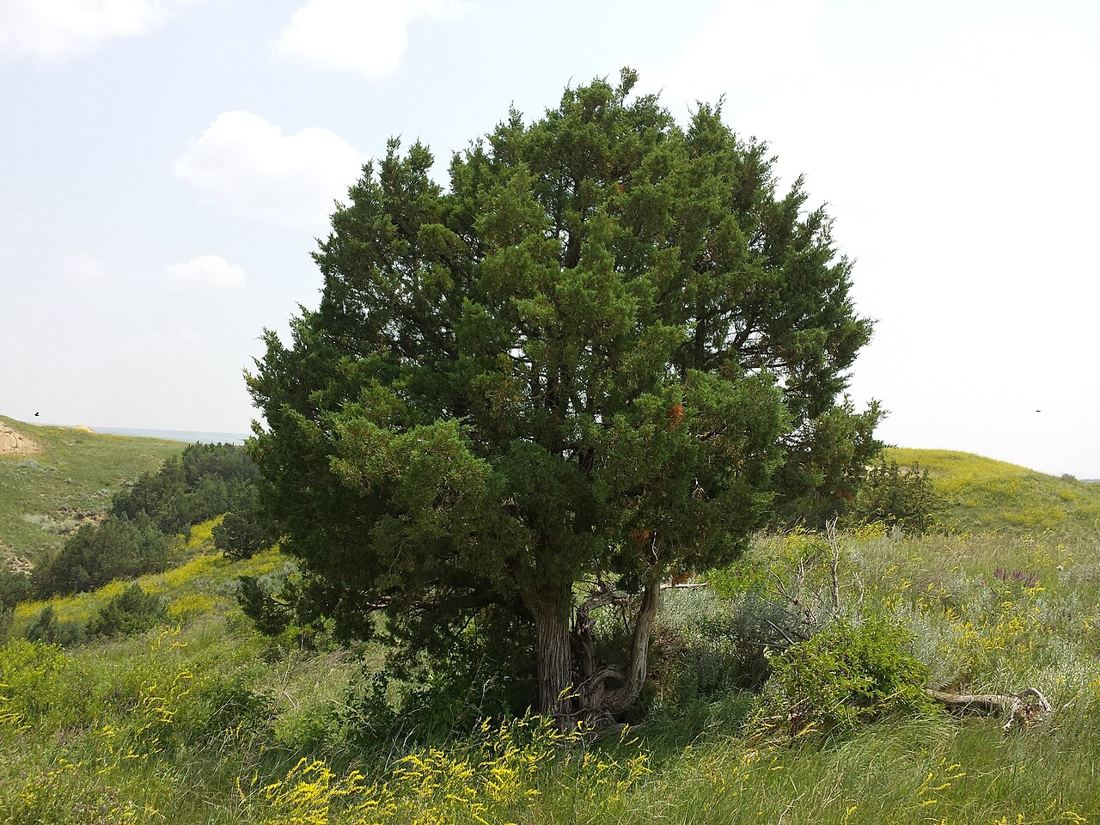
Rocky Mountain juniper
Juniperus scopulorum · Tree
📍 183 verified iNaturalist sightings in eastern WA & north Idaho.
⚠️ Cautions
Avoid in pregnancy; not for large amounts.
How to identify
Small tree with scale-like leaves and blue waxy berry cones; dry rocky sites.
Traditional uses
Berries and twigs used in smudge and tea for colds traditionally.
More: iNaturalist · Wikipedia
Background
Juniperus scopulorum, the Rocky Mountain juniper, is a species of juniper native to western North America, from southwest Canada to the Great Plains of the United States and small areas of northern Mexico. They are the most widespread of all the New World junipers. They are relatively small trees, occasionally just a large bush or stunted snag. They tend to be found in isolated groves or even as single trees rather than as the dominant tree of a forest. Though they can survive fires, they are vulnerable to them especially when young and this is one of the factors that can limit their spread into grasslands.
Rocky Mountain junipers provide habitat and food for wildlife. They provide cover to a range of species, from small birds and mammals to deer and bighorn sheep. Their berry-like cones are eaten by many animals and their scaly leaves and small twigs are browsed in small amounts by large herbivores. The primary human use is in landscaping for aesthetic purposes, to shelter habitations, or attract fruit-eating birds. They are also used in small amounts for their insect repellent and rot-resistant wood or as firewood for heating.
From Wikipedia, Juniperus scopulorum, under CC BY-SA 4.0.
