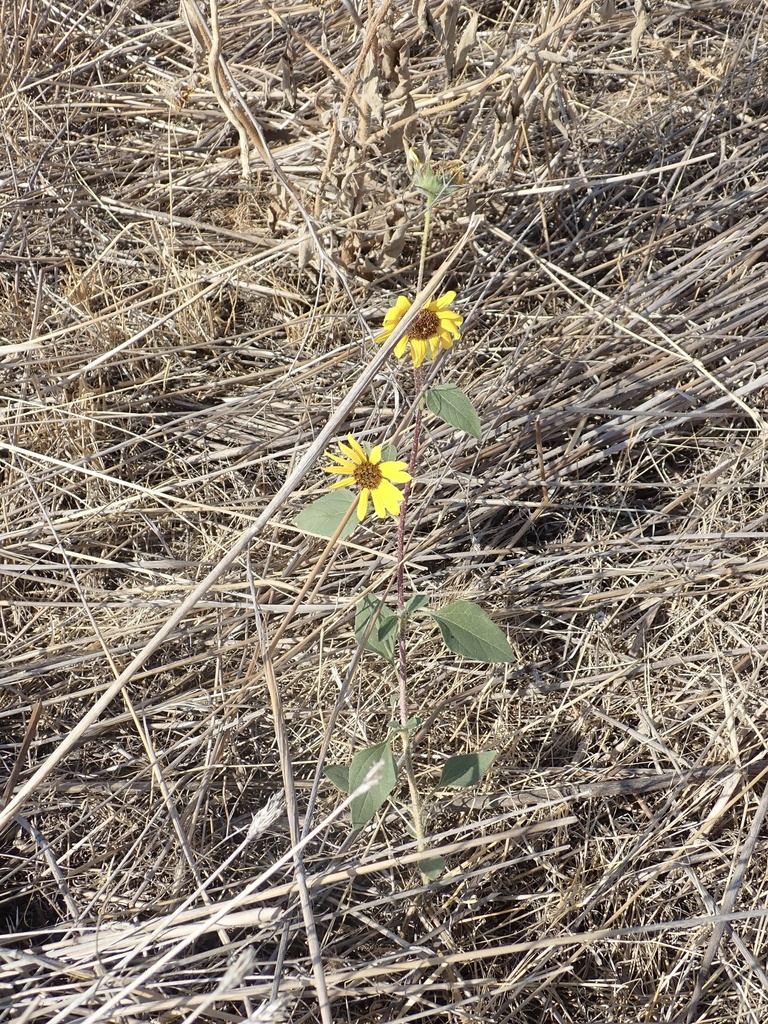
Common sunflower
Helianthus annuus · Wildflower / herb
📍 204 verified iNaturalist sightings in eastern WA & north Idaho.
⚠️ Cautions
None known.
How to identify
Tall rough-hairy plant with large yellow flower heads; disturbed dry ground.
Food uses
Seeds eaten raw, roasted, or ground; oil.
More: iNaturalist · Wikipedia
Background
The common sunflower (Helianthus annuus) is a large annual forb in the daisy family Asteraceae. The most common varieties have large yellow orange flowers heads, that are a tall stem. The flowers produce seeds in a floret, that follows the fibonacci sequence. The domesticated form of common sunflower is harvested for its edible seeds, which come in two types: oil and confectionery seeds.
Oilseed sunflowers are widely grown globally and represent the fourth most used vegetable oil in the world. They also are used widely as bird food or as food for livestock. In contrast, confectionery sunflower seeds are often eaten as a snack food or in baking. Though first domesticate in the Americas, production of sunflowers commercially is concentrated in Russia, Ukraine, and the European Union.
There also are horticultural sunflower varieties that are used as plantings in domestic gardens for aesthetics. In some cultivation practices sunflowers are used for phytoremediation, removing chemicals from the soil, and as cover crop because root exudates help with suppression of certain kinds of weeds. Wild plants are known for their multiple flower heads, whereas the domestic sunflower often possesses a single large flower head atop an unbranched stem.
From Wikipedia, Common sunflower, under CC BY-SA 4.0.