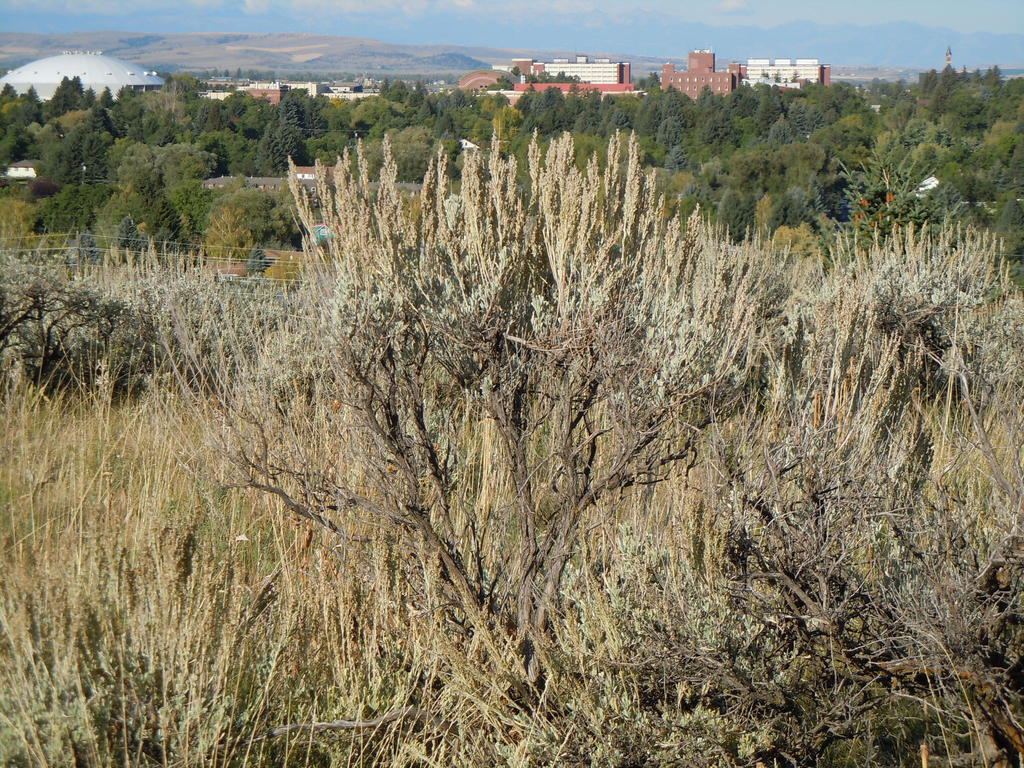
Big sagebrush
Artemisia tridentata · Shrub
📍 1,445 verified iNaturalist sightings in eastern WA & north Idaho.
⚠️ Cautions
Contains thujone—avoid internal use in pregnancy or for long periods.
How to identify
Silvery shrub with leaves ending in 3 teeth and a strong sage smell; dominates dry eastern WA.
Traditional uses
Leaves burned as smudge and used in tea for colds traditionally; strong antiseptic.
More: iNaturalist · Wikipedia
Background
Artemisia tridentata, commonly called big sagebrush, Great Basin sagebrush or simply sagebrush (one of several related species of this name), is an aromatic shrub from the family Asteraceae.
It grows in arid and semi-arid conditions, throughout a range of cold desert, steppe, and mountain habitats in the Intermountain West of North America. Big sagebrush and other Artemisia shrubs are the dominant plant species across large portions of the Great Basin.
Sagebrush provides food and habitat for a variety of species, such as sage-grouse, pronghorn, gray vireo, pygmy rabbit, and mule deer. Several major threats exist to sagebrush ecosystems, including human settlements, conversion to agricultural land, invasive plant species, and wildfires.
Native Americans have used the plant medicinally. It is also useful as firewood.
From Wikipedia, Artemisia tridentata, under CC BY-SA 4.0.
